
Manson, WA: Community Guide to the Lake Chelan Valley
North Shore, Agricultural Roots, and a Slower Pace

Manson is an unincorporated community located on the north shore of Lake Chelan, approximately seven miles northwest of the city of Chelan. It sits between the lake and surrounding orchard lands, with a compact town center and residential areas extending into the hillsides above the shoreline. While closely connected to Chelan by geography and daily movement, Manson has developed its own identity shaped by agriculture, lake access, and a smaller‑scale rhythm of life.
Manson is a census‑designated place rather than an incorporated city. Local services, schools, and infrastructure reflect that scale, contributing to a community that feels distinct from the valley’s primary hub at the south end of the lake.
Community & Census Snapshot
Based on American Community Survey estimates, Manson has a population of approximately 1,462 residents across 1.3 square miles. The community has a median age of approximately 52, reflecting a significant share of long-time residents, retirees, and second-homeowners who have settled on the north shore over time.
Manson’s economy is shaped by agriculture, seasonal tourism, and a growing wine and artisan industry. Median household income is approximately $91,319 — above regional averages — while per capita income is lower at approximately $41,513, a pattern consistent with a community that includes both higher-value seasonal property ownership and year-round households at varying income levels. Like Chelan, Manson’s resident population grows noticeably during summer months as seasonal residents and visitors arrive.
Agricultural Roots and Early Settlement

The land surrounding Manson was cultivated early for orchards and agriculture, supported by irrigation projects and packing facilities that anchored the local economy through much of the twentieth century. Fruit growing, packing, and related industries played a central role in the community’s development, alongside manufacturing and milling activity near nearby bays and lakes.
Over time, Manson’s relationship with Lake Chelan became just as important as its agricultural base. Access to the water, protected bays, and a walkable shoreline helped shape how residents and visitors use the area today, even as the community has remained relatively small in population and footprint.
The North Shore: Lake Access and Daily Life
Manson’s town center is compact and oriented toward the lake, with a marina, parks, and public waterfront areas forming a focal point for community activity. Residential neighborhoods extend inland and uphill, often overlooking the lake and surrounding orchards.
The pace of daily life reflects the community’s scale. Many residents balance year-round living with seasonal rhythms tied to agriculture, tourism, and lake use. Within the broader Lake Chelan Valley, Manson occupies a middle ground — more developed and accessible than remote upper-lake communities, yet smaller and less centralized than Chelan itself. This position has shaped its character as a place that values proximity to the lake and land without the intensity of a full-service center.
Orchards, Wineries, and the Modern Landscape
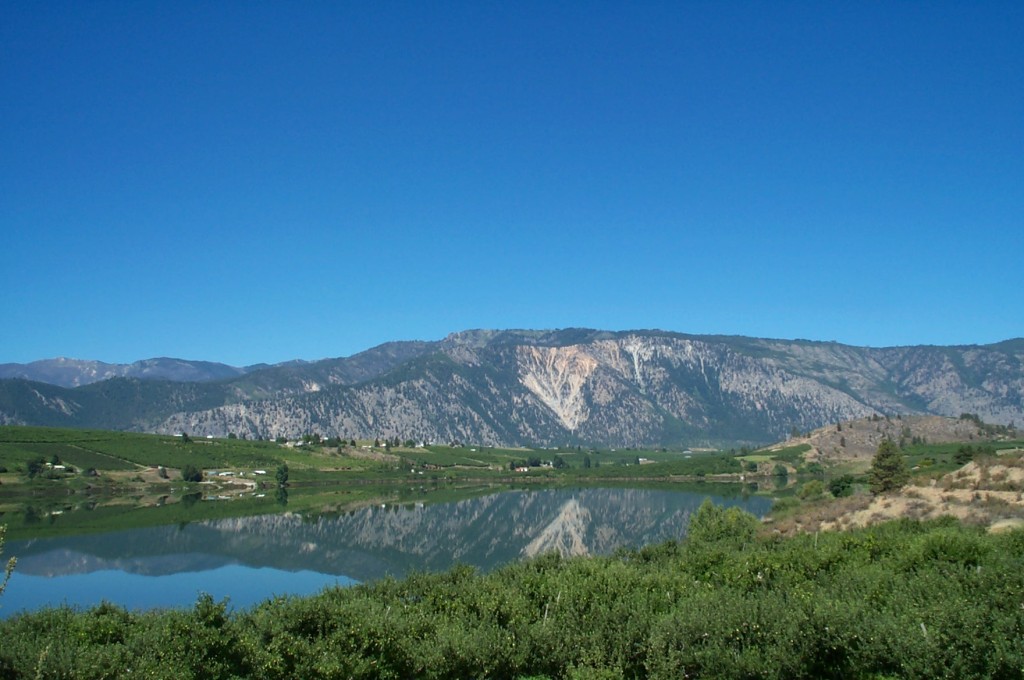
The north shore’s long agricultural history has created a landscape where orchards and vineyards now coexist. Wineries and tasting rooms have become a visible part of Manson’s identity — drawing visitors to the north shore while operating alongside long-standing farms, family homes, and local institutions.
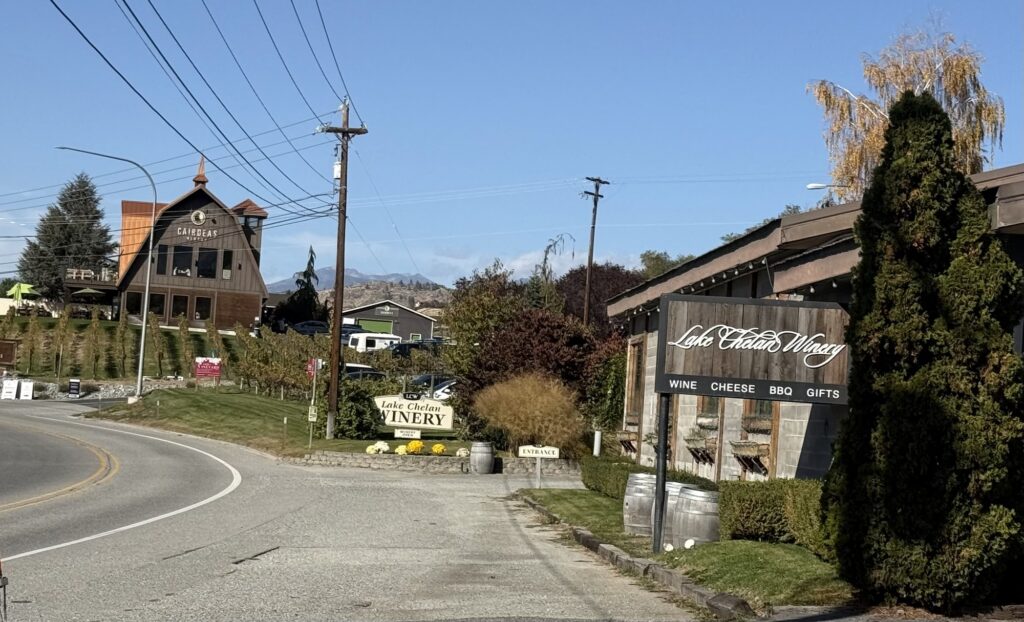
What distinguishes Manson is that this evolution happened alongside its agricultural roots rather than in place of them. The result is a community with a modern, creative edge — known for its wineries, artisan businesses, and close-knit feel — that still feels grounded in the land and the rhythms of the seasons.
Frequently Asked Questions About Manson
Where is Manson, Washington?
Manson is located on the north shore of Lake Chelan in Chelan County, north-central Washington State, approximately seven miles northwest of the city of Chelan.
Is Manson an incorporated city?
No. Manson is an unincorporated community and a census-designated place. It is not an incorporated city. Local services, schools, and infrastructure reflect that smaller scale.
How big is Manson?
Manson covers approximately 1.3 square miles and has a population of approximately 1,462 residents, based on American Community Survey estimates.
What is Manson known for?
Manson is known for its north shore setting on Lake Chelan, its long agricultural history, and a growing wine and artisan industry. Orchards, vineyards, wineries, and tasting rooms are all central to the community’s character and identity.
How is Manson different from Chelan?
Manson is smaller, less centralized, and operates at a slower pace than Chelan. It functions as a residential community and seasonal gathering place rather than a full-service hub. Chelan, at the south end of the lake, serves as the valley’s primary civic and commercial center.
What is the economy of Manson like?
Manson’s economy is shaped by agriculture, seasonal tourism, and a growing wine and artisan industry. Median household income is approximately $91,319 — above regional averages — while per capita income is lower at approximately $41,513, reflecting a mix of seasonal property ownership and year-round households.
Does Manson have lake access?
Yes. Manson’s town center is oriented toward the lake, with a marina, parks, and public waterfront areas forming a focal point for community activity.
Are there wineries in Manson?
Yes. Wineries and tasting rooms have become a visible part of Manson’s identity, drawing visitors to the north shore while operating alongside long-standing farms and local institutions.